[Section system]

Ten slide sections. Every page is an ordered list of these.

Each section is a typed component with its own props contract. Copy lives in src/lib/site-content.ts; the components live in src/components/sections/.

StatementSlide

The workhorse. One claim, broken across lines, with an optional footnote.

eyebrow, lines[], accentLine, footnote, ground, align, full

Example

One idea per slide.Nothing competing with it.

Footnotes carry the nuance so the statement can stay absolute.

ThenNowStrip

A ledger of then/now pairs. Best used to establish inevitability before making a claim.

eyebrow, heading, moments[{ actor, year, then, now }]

Example

Then, and now.

  1. Rosenblatt · 1958

    A machine learns to tell one shape from another by adjusting weights.

    Every recommendation, forecast and fraud check you rely on runs on that idea.

  2. ImageNet · 2012

    A network wins an image contest by a margin nobody expected.

    Machine perception is a commodity API, priced per thousand calls.

  3. Transformers · 2017

    Eight researchers publish a paper about paying attention.

    The architecture underneath nearly every model your organization now uses.

NegationTriptych

Three 'not this, but that' cards. Sharpens positioning by naming what the work isn't.

eyebrow, heading, items[{ not, but }]

Example

Not this. This.

It's not a tooling decision

It's a decision about how your organization thinks

It's not about hiring AI people

It's about your existing people becoming fluent

It's not a pilot programme

It's judgment, rebuilt at the pace of the work

QuadrantMatrix

Labelled 2x2 with axis captions and one highlighted cell. For placing the reader.

xLow, xHigh, yLow, yHigh, quadrants{}, highlight

Example

A 2x2 that places the reader.

Present

Low

Quadrant A
Quadrant B
Quadrant D
Quadrant C

High

Absent

StatWall

Oversized figures that count up once on entry. Keep captions to a single line.

eyebrow, heading, stats[{ value, prefix, suffix, caption, source }]

Example

Figures, counted up.

0%

of leaders say AI matters to strategy. Far fewer can say what theirs is.

Placeholder — replace with a sourced figure

0x

the gap between organizations with AI fluency and those buying licences.

Placeholder — replace with a sourced figure

SpectrumSlider

An interactive split between two competing allocations. The only stateful section.

eyebrow, heading, left{}, right{}, defaultValue

Example

An allocation, not a binary.

70%

Side A

The familiar allocation.

30%

Side B

The one that compounds.

LayerStack

An ordered ladder of tiers, each inset from the last. For staged models.

eyebrow, heading, layers[{ index, title, body }]

Example

Built in order.

01

Literacy

Shared language and an honest read of what these systems can and cannot do.

02

Fluency

Leaders and teams working with models daily, in their own real problems.

03

Leverage

The two or three places where AI changes the economics of your business.

04

Institutional memory

Judgment that stays after I leave — written down, taught, and owned internally.

EngagementCards

Three offers side by side, each with a shape label and bullet specifics.

eyebrow, heading, engagements[{ index, shape, title, summary, points[] }]

Example

Ways to work.

01Programme

Organizational transformation through habit change

Transformation doesn't happen in a strategy deck. It happens in what people actually do on a Tuesday. Shiftspace programmes work the individual and the organizational level at once, so new behaviour holds after the programme ends.

  • Diagnosis: A read of how the work actually happens today — the habits, defaults and workarounds nobody wrote down.
  • Individual practice: The small daily habits that change how one person works, chosen with them rather than for them.
  • Organizational practice: The rituals, defaults and meetings that either hold the change in place or quietly undo it.
  • Measured on behaviour: Progress is read from what people do afterwards, not from attendance or satisfaction scores.
02Embedded

A builder inside your organization

I embed with your team to rethink and reorganize how value is created — building the cognitive infrastructure, not just software. The tools, data paths and shared reasoning that determine how your organization perceives, decides and remembers.

  • Cognitive infrastructure: Where knowledge lives, how decisions get made, and what the organization is able to see at all.
  • Systems, shipped: Real working software built in your context, with your people on the tools from day one.
  • Value chains redrawn: The two or three places where AI genuinely changes the economics — rebuilt, not decorated.
03Sessions

Workshops, facilitation and keynotes

Capacity is the substrate everything else runs on. Attention, state and presence decide whether a leadership team can think clearly at all — so I work that layer directly, alongside the strategic one.
  • AI and leadership: Flow, attention and organizational change, worked through with the people who set the pace.
  • Breathwork and embodiment: State as a working practice, not garnish — used in the room, on the questions that matter.
  • Offsites and keynotes: Facilitated team sessions, leadership offsites and talks for larger rooms.

OfferDeck

Three tabbed offers as a rotating 3D card deck. Auto-advances until the visitor interacts; flattens on mobile and under reduced motion.

eyebrow, heading, offers[{ index, track, shape, title, summary, points[], outcome }], interval

Example

A deck that rotates.

01Programme

Organizational transformation through habit change

Transformation doesn't happen in a strategy deck. It happens in what people actually do on a Tuesday. Shiftspace programmes work the individual and the organizational level at once, so new behaviour holds after the programme ends.

  • Diagnosis

    A read of how the work actually happens today — the habits, defaults and workarounds nobody wrote down.

  • Individual practice

    The small daily habits that change how one person works, chosen with them rather than for them.

  • Organizational practice

    The rituals, defaults and meetings that either hold the change in place or quietly undo it.

  • Measured on behaviour

    Progress is read from what people do afterwards, not from attendance or satisfaction scores.

A way of working your organization keeps doing once I'm gone.

OfferSequence (spike)

The same three offers as one pinned slide act: scroll drives which offer is open, no timer. Falls back to a plain stack under reduced motion.

eyebrow, heading, offers[...], ground

Example

Three ways in, one at a time.

Organizational transformation through habit change

Transformation doesn't happen in a strategy deck. It happens in what people actually do on a Tuesday. Shiftspace programmes work the individual and the organizational level at once, so new behaviour holds after the programme ends.

  • Diagnosis

    A read of how the work actually happens today — the habits, defaults and workarounds nobody wrote down.

  • Individual practice

    The small daily habits that change how one person works, chosen with them rather than for them.

  • Organizational practice

    The rituals, defaults and meetings that either hold the change in place or quietly undo it.

  • Measured on behaviour

    Progress is read from what people do afterwards, not from attendance or satisfaction scores.

A way of working your organization keeps doing once I'm gone.

A builder inside your organization

I embed with your team to rethink and reorganize how value is created — building the cognitive infrastructure, not just software. The tools, data paths and shared reasoning that determine how your organization perceives, decides and remembers.

  • Cognitive infrastructure

    Where knowledge lives, how decisions get made, and what the organization is able to see at all.

  • Systems, shipped

    Real working software built in your context, with your people on the tools from day one.

  • Value chains redrawn

    The two or three places where AI genuinely changes the economics — rebuilt, not decorated.

Working systems, and the judgment behind them, owned internally.

Workshops, facilitation and keynotes

Capacity is the substrate everything else runs on. Attention, state and presence decide whether a leadership team can think clearly at all — so I work that layer directly, alongside the strategic one.

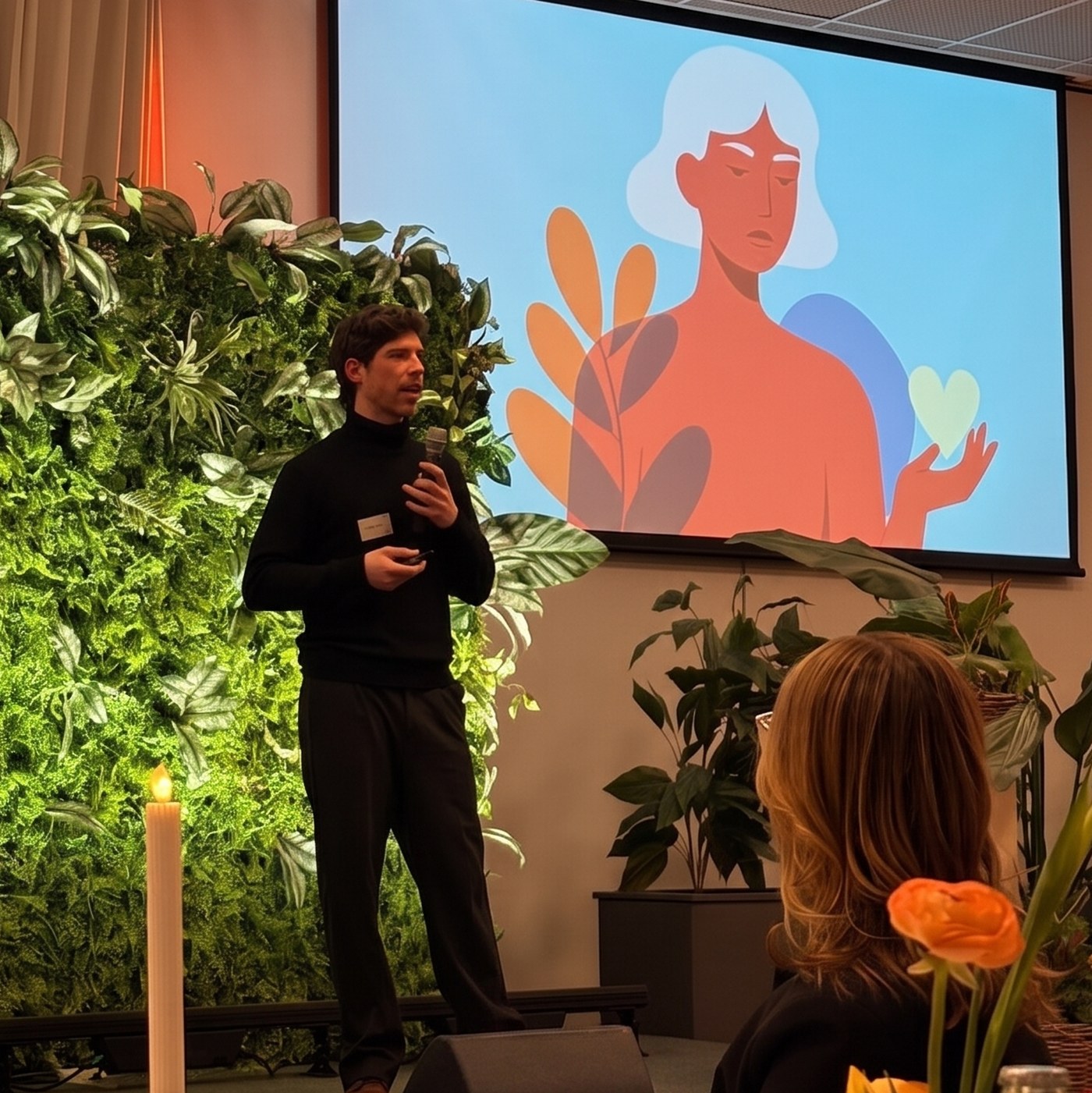
Speaking on stage at a leadership event
  • AI and leadership

    Flow, attention and organizational change, worked through with the people who set the pace.

  • Breathwork and embodiment

    State as a working practice, not garnish — used in the room, on the questions that matter.

  • Offsites and keynotes

    Facilitated team sessions, leadership offsites and talks for larger rooms.

A room that can think together, and knows how to get back there.

QuotePanel

A single attributed line, centred. Use sparingly — one per page at most.

quote, attribution, ground

One line, given room to land.

Attribution

FrontierMap

The jagged frontier: an SVG boundary between machine-solved and human work, optionally plotted with task chips and a four-category key.

eyebrow, heading, standfirst, chips[], legend, aboveLabel, belowLabel, ground

Example

An uneven edge, plotted with real tasks.

Still outside — humanInside — already machine-solved
Draft the first versionSummarise the callReformat the deckPull the numbersTranslate the briefScope the workReview a proposalPrep the workshopSay no to the wrong clientHold a hard conversationRead the roomOwn the consequenceTeach it to someone elseNotice what nobody asked for
  • Inside the line

    Already over the edge. A model does this at least as well as you, today, for almost nothing.

  • Drifting inward

    Still yours, but not comfortably. Twelve months of drift and the line will have crossed it.

  • Still outside

    Stubbornly human — context, consequence, and the reason anyone trusts the answer.

  • Unmapped

    Nobody has seriously tried. Not because it is hard, because nobody looked.

TaskBundle

A pinned two-beat act: the same task chips scattered across the frontier, then regrouped into progress clusters as you scroll.

eyebrow, scatterHeading, clusterHeading, chips[], ground

Example

Zoom out and the same tasks serve three kinds of progress.

01 · Make the call

Pull the numbersScope the workReview a proposalSay no to the wrong clientOwn the consequence

02 · Move the room

Summarise the callPrep the workshopHold a hard conversationRead the roomTeach it to someone else

03 · Make the thing

Draft the first versionReformat the deckTranslate the briefNotice what nobody asked for

MissingPiece

A ring with a gap beside a list of four. Closes an argument on a hopeful note.

eyebrow, heading, standfirst, items[{ index, title, body }], gapLabel, ground

Example

What the freed capacity is for.

the missing piece
  • 01

    Judgment

    The part that only shows up when someone carries the outcome. Machines produce options; you decide what is true enough to act on.

  • 02

    Relationship

    Trust is not a deliverable. It accrues in the conversations there was never time for.

  • 03

    Taste

    Knowing which of the twenty good answers is the right one here, for these people, this year.

  • 04

    Care

    The work you would still do if nobody measured it. Usually the reason the job exists at all.

Hero / ContactSlide

Page bookends. Hero opens with the thesis; ContactSlide closes with a form.

Hero: eyebrow, lines[], standfirst, meta[] — Contact: eyebrow, lines[], blurb

Example hero

The opening claim.In two moves.

A standfirst gives the reader the plain-language version.

  • Meta one
  • Meta two

Start a conversation

The closing ask.

A short instruction for the reader.